
Shutter Frames — Everything You Need to Know
Shutter frames create a perfect surround for your plantation shutters, especially useful if you have an older house with uneven walls or windows that are not perfectly level.
The frame is mounted on your wall or window first, then your shutter panels are mounted inside the frame for a beautiful, professional finish.
Why Are Shutter Frames Important?
Most windows are not perfectly level or square. Without a frame:
The shutter panels may not hang squarely
You may have to sand down or shim inside the window opening itself to create a level surface
Installation is much more challenging
A shutter frame provides a perfectly square, level structure with the hinges pre-installed by the factory to ensure perfect alignment with your shutter panels.
Other benefits of using a shutter frame:
Magnetic catches — shutter panels stay closed with recessed magnets. Our frames have metal plates already installed to catch these magnets and keep the panels closed
Light blocking — our frames have a light block piece that extends behind the shutter panels to block light from entering between the panels and the frame
Professional finish — once your frame is installed, a bead of caulking around the outside edge gives a seamless, professional-looking result
Decorative trim — a shutter frame can create the look of a decorative trim or molding around the window opening if there is no existing trim
Inside Mount vs Outside Mount
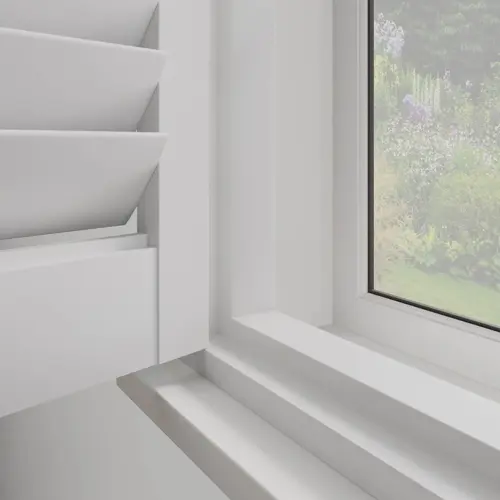
Inside Mount
Inside mount frames fit inside the recessed depth of a window opening and sit more flush to the wall. If you still want to be able to use your window sill after your shutters are installed, this is usually the right option.
Things to check for inside mount:
You have sufficient recess depth for your chosen slat size
There are no obstructions (handles, locks, alarm sensors) that the frame would block
At least 1" of flat surface area inside the recess to properly secure the frame
Outside Mount
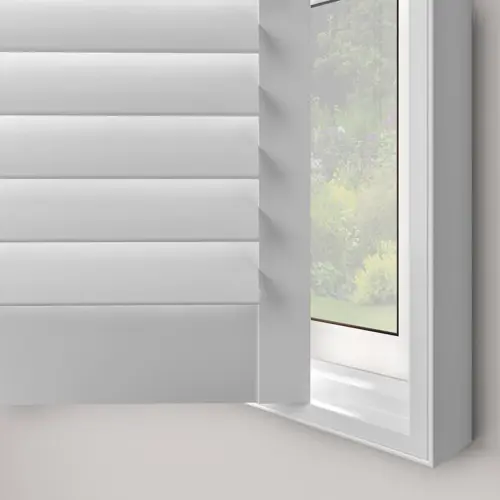
Outside mount frames attach to the wall or trim surrounding the window opening. If there is no recess on your windows, as with many sash windows, an outside mount is usually the best option.
Outside mount is also the right choice when:
Your windows do not have enough recess depth for your chosen slat size
Your windows tilt in for cleaning and you want to preserve this function
You want to create a larger visual footprint for the shutter by covering a wider area
Which Frame Should I Choose?
L-Frame
The most popular frame option. A subtle square frame that offers all the structural and functional benefits without drawing attention away from the shutter panels.
L-Frames are ideal for:
Windows that already have an existing trim
Windows where you need to extend the recess depth to accommodate your chosen slat size
Both inside mount and outside mount installations
L-Frames can be positioned:
Closer to the glass
Flush with the wall
Pulled out slightly past the edge of the wall to extend your recess depth
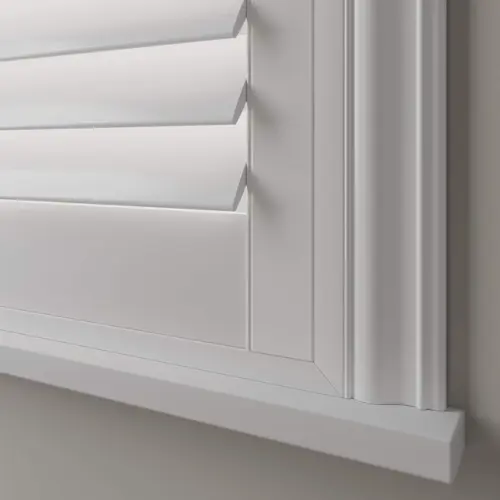
Z-Frame
Z-Frames are used for face mounting, they have a decorative lip that overlaps the wall to create the look of a decorative molding surrounding the window opening.
Z-Frames are ideal for:
Windows without an existing trim or molding
Windows with a lot of variance in measurements, as the overlapping trim hides any gaps or imperfections
Bullnose windows, where the decorative lip covers the rounded corners and prevents any visible gap
Note: Z-Frames always sit flush with the edge of the wall and cannot be pulled out past it to extend depth.
How Many Frame Sides Do I Need?
We always recommend a 4-sided frame whenever possible. The more frame sides you have, the more support you have, which means less adjustments over time and an easier installation.
A 4-sided frame provides:
A perfectly square area for your panels to hang in
Magnetic catches at top and bottom to keep panels closed
Light blocking pieces behind the panels on all sides
When a 3-Sided Frame Is Acceptable
There are some exceptions where 3 sides are appropriate:
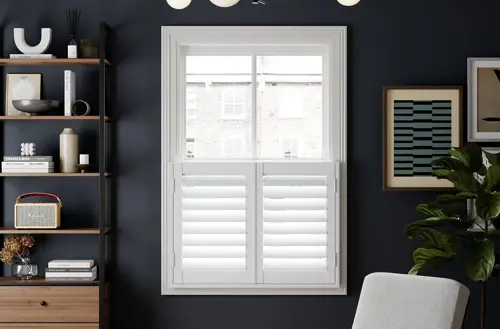
Cafe shutters — covering only the lower portion of the window, these generally use a left, right, and bottom frame. Very wide cafe shutters can still benefit from a 4-sided frame
Patio door shutters — a bottom frame piece can pose a tripping risk on the way out the door. Ask for floor clearance at the bottom so your shutter panels can clear your flooring or rugs
Marble or granite sills — you can opt for a left, right, and top frame to keep your sill open, or request a 4-sided frame with no pre-drilled holes in the bottom piece so it simply rests across the sill
Frames and Tilt-In Windows
Inside mount shutter frames will most likely block your window from tilting all the way in for cleaning. Some customers still prefer the look of an inside mount and opt to lose this function.
To keep your tilt-in function, opt for an outside mount frame. This way the entire frame sits on the wall outside of your window opening, keeping the inside clear so your window can still tilt in.
Our Free Design Check
Each product range offers several sizes of each frame style, so you are sure to find one that fits your window. At checkout, be sure to select the Design Review option and a member of our team will check your order before it goes into production, if anything doesn't look right we'll give you a call.