
Plantation Shutters and Window Sills
10th August 2021
7 min read
10th August 2021
7 min read
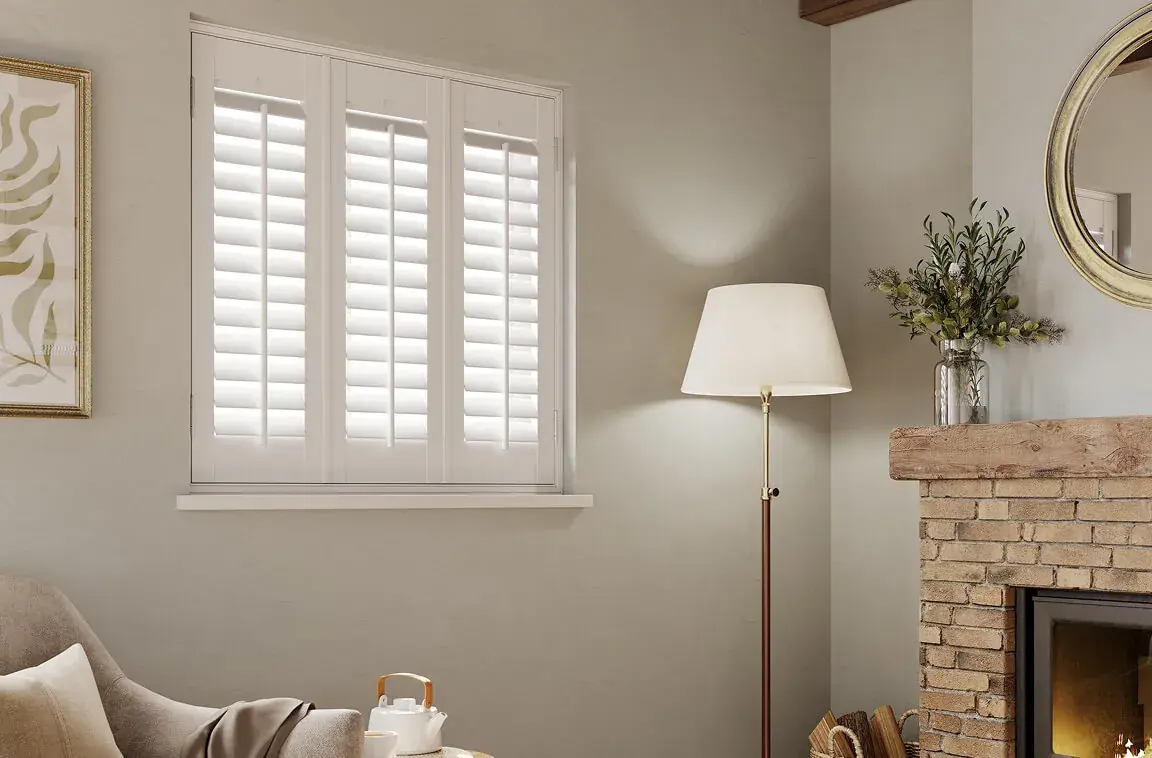
For windows with a protruding sill or ledge at the bottom, we often get asked how to take this into consideration when ordering custom plantation shutters. Sills do not restrict your ability to install a shutter or even to have a full 4-sided frame around your shutter unit.
The term sill is sometimes used to refer to the window recess, but at The Shutter Store we consider a window sill any protrusion from the bottom of the window opening. Sometimes referred to as a ledge or shelf, we consider it a sill if it projects past the edge of the wall or trim. The inside recess (from the edge of the wall or trim back toward the glass) we refer to as the recess depth of the window opening.
We recommend always having as many frame sides as possible to keep your shutter unit stable, secure, and perfectly squared to ensure proper panel alignment.
Here is how each shutter style handles a window sill:
Full height shutters can have a frame around all 4 sides. The shutter panels have recessed magnets at the top and bottom which catch the top and bottom frame pieces to help keep the panels tightly closed.
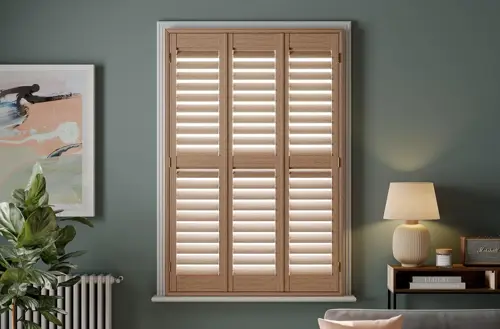
Cafe style shutters cover only the lower portion of your window opening, so the top is always kept open without a frame piece going across the top. For this reason, the bottom frame is essential with cafe style shutters. The frame sides for cafe style will always be left, right, and bottom.

Tier on tier shutters will always require a 4-sided frame. Because your tiers are split and multiple panels hang above and below one another, the shutter frame will make your installation easier and minimise the number of adjustments needed over time.
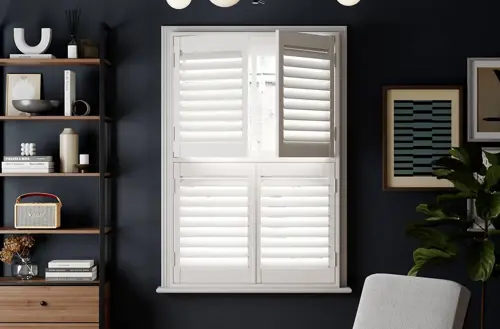
If you are doing an inside mount with an L-Frame, there is no need to make any special requests or adjustments to account for your window sill. The L-Frame is a square frame that fits completely inside the recess of the window opening and does not require any modifications if you have a protruding sill at the bottom.
For an inside mount with a Z-Frame, you will want to select the sill cut option when ordering your frame. Z-Frames have an overlapping trim that surrounds the window opening. The sill cut option removes the overlapping lip from the bottom frame piece, leaving you with a flat bottom frame that can rest across the sill.
For an outside mount on a window with a sill, an L-Frame is ideal. It is already flat at the bottom and does not require any modifications for a sill. When reviewing your outside mount order, our shutter experts will inquire if your window has a sill and how far it protrudes, so we can determine how to pre-drill the mounting holes in your frame.
When measuring for outside mount, if your window has a sill, you will not need to include the width of the bottom frame piece in your measurements.
You can also use a Deco Frame to add the appearance of a decorative molding surrounding the shutter unit:
Our Classic Poplar Hardwood range offers a sill cut for Deco Frames, so you can still opt for a frame around all 4 sides with a flat bottom frame piece
Our American Polyvinyl and American Hardwood ranges do not offer the sill cut option on Deco Frames, so you would need to select a 3-sided frame in this instance
Alternatively for Deco Frames with a sill, you can choose left, right, top for your frame sides
Cafe style shutters will always use a 3-sided frame. For full height shutters, we strongly recommend a 4-sided frame whenever possible for ease of installation as well as longevity and stability.
Some circumstances may mean you cannot or do not want to use a bottom frame piece, including:
Patio door shutters, where the bottom frame piece may pose a tripping risk when stepping through the door
Some casement windows with a protruding crank handle at the bottom
Even with a marble or granite sill you can still use a bottom frame for support. Simply request no pre-drilled holes in the bottom frame piece to avoid having extra holes in the frame that you do not end up using.
If you use your window sill for storing or displaying items and want to keep it free when the shutter panels are opened, you can opt for a 3-sided frame. Keep in mind:
You may need to make extra adjustments to keep the frame level while installing
You may need to adjust the hinges and panel alignment over time
You may see more light coming through underneath the shutter, as a bottom frame piece has a light blocking piece that goes behind the shutter panel to minimise light seepage