
Inside or Outside Mount Plantation Shutters?
17th January 2020
4 min read
17th January 2020
4 min read
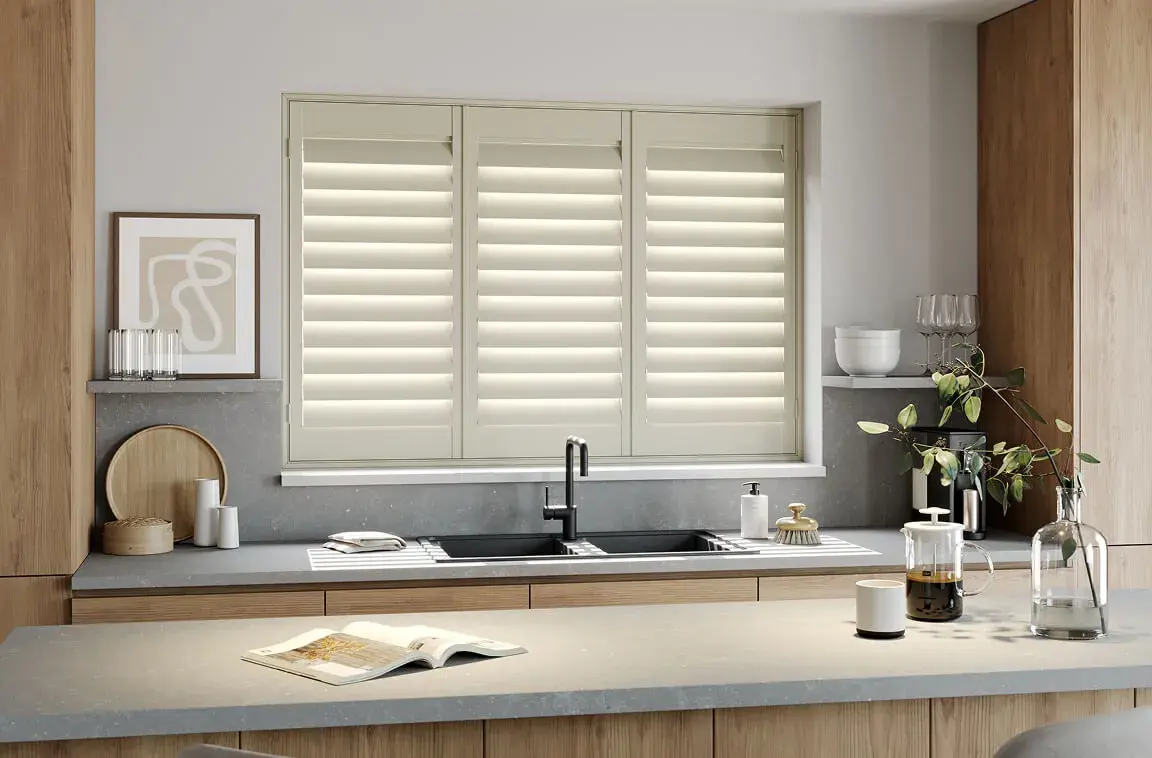
Before you start measuring for internal window shutters, you need to decide between inside mount and outside mount. Your choice affects how you measure, which frame type you'll need, and how your shutters will look and function once installed.
Not to be confused with interior vs exterior shutters, both options here refer to interior shutters. The difference is how and where the frame attaches to your window.
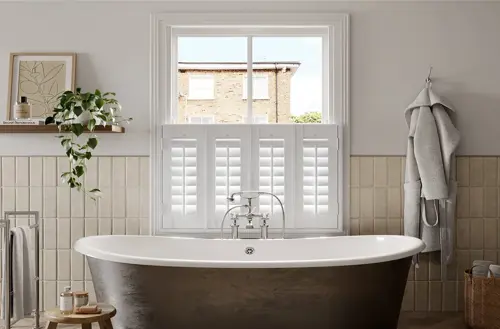
Inside mount shutters are measured to fit within a recessed window opening. If your window is set back from the wall enough to accommodate the shutter frame, you can consider an inside mount.
You can measure your recess depth from the edge of your wall or window trim, back toward the glass (or first obstruction such as a crank handle, alarm sensor etc.). You can find the depth requirements for inside mount in our inside mount measuring guide.
Outside mount shutters are measured to surround your window opening and mount to the wall just outside of the glass area, or on top of your existing trim. You may also hear this referred to as direct mount plantation shutters.
The shutter frame will project out into the room, ideal for cleaning your shutters if your windows or you have limited to no recess depth available.
You can find measuring details in our outside mount measuring guide.
Feature | Inside Mount | Outside Mount |
|---|---|---|
Best for | Windows with sufficient recess depth | Shallow recesses, uneven openings |
Measuring | Simple — just provide the opening size | More forgiving if measurements are slightly off |
Appearance | Sits flush within the window recess | Can replace or cover existing trim |
Frame options | L-Frame, Z-Frame (Face Mount) | Acts as window molding/trim |
Drawbacks | May block tilt-in or crank-out windows | Projects out into the room |
Inside mount is a popular choice if your window is deep enough. Inside mount shutters fit inside the window opening and can be pushed back toward the glass for very deep windows, or they can be pulled forward to be flush with the wall. They also offer the benefit of being able to be pulled out slightly past the wall to give you a little extra depth if needed.
Pros:
Fits neatly within the window recess
Can be adjusted forward or back within the opening
Simple to measure — just provide the window opening width and height (smallest of 3 measurements)
Works with L-Frame and Z-Frame (Face Mount), we handle the rest
Cons:
May block tilt-in windows from functioning for cleaning
Can obstruct crank handles and lever locks on crank-out windows
Outside mount is a great choice for windows with limited recess depth, or windows that may not be perfectly level or square.
Pros:
Ideal for shallow or no recess
Hides imperfections and gaps in the window opening
Can replace or act as window molding/trim
More forgiving if measurements have a slight variance
Better suited to tilt-in and crank-out windows
Cons:
Frame projects out into the room
Measure from the edge of your wall or window trim back toward the glass. Check our inside mount measuring guide for the minimum depth requirements for each frame type.
Generally not recommended. Inside mount frames can block tilt-in windows from opening for cleaning, and may obstruct crank handles and lever locks. Outside mount is usually the better choice for these window types.
Outside mount is the more forgiving option. Because it surrounds rather than sits inside the opening, it will cover any variances and imperfections.
Inside mount refers to how the shutter is installed within the window recess. Interior shutters simply means shutters fitted inside the home, both inside and outside mount options are interior shutters.
You should now have everything you need to choose between inside and outside mount shutters. If you need more advice, you can contact our helpful team.