
Plantation Shutters Mid Rail Guide
22nd October 2021
5 min read
22nd October 2021
5 min read
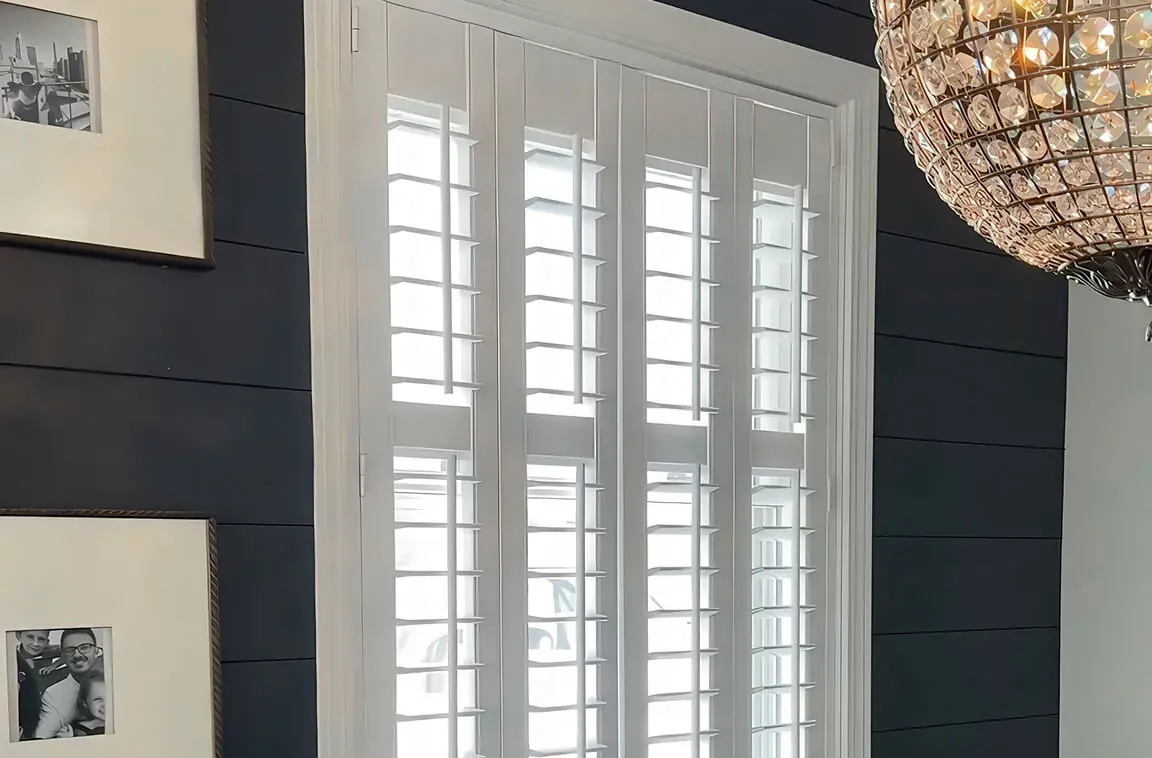
Adding a mid-rail to your full height shutters can give you many of the same design benefits of cafe style or tier on tier shutters, while keeping the structural benefits and ease of installation that make full height shutters our most popular style.
A mid-rail (also called a divider rail) is a horizontal solid bar approximately 3" tall that divides a shutter panel into upper and lower sections. The slats above and below the mid-rail can be operated independently, giving you separate control over light and privacy in each section.
Full height shutters are the easiest style to install:
A full 4-sided frame provides a perfectly square, level structure
Magnets at the top and bottom of each panel catch the frame pieces to keep the panels closed
Hinges along the sides of each panel support the weight evenly
By comparison:
Cafe style shutters only have a frame on 3 sides (left, right, and bottom), which can pose challenges for wider windows where the top of the panels have no support
Tier on tier shutters have more panels and more moving parts, requiring additional adjustments to keep panels aligned over time. Gravity can cause the top tier to droop over the bottom tier
By adding a mid-rail to your full height shutters you can:
Keep the lower slats closed for privacy while opening the upper slats for light entry
Keep both sections fully open for maximum light
Close both sections fully for maximum privacy and light blockage
Operate each section entirely independently at any time
Aside from design function, mid-rails also add stability and longevity to your panels. This is especially important for:
Tall windows — a mid-rail is actually required on any window taller than 62"
Wide windows — helps prevent any bowing or warping over time
The most common approach is to align the mid-rail with a natural feature or obstruction in the window. Common options include:
The divide between the upper and lower sash on a double hung window
A lock, crank handle, or alarm sensor you want to conceal or work around
The center of the window height, if there is no specific feature to align with
One third or two thirds of the way up, depending on how large a section of slats you want to keep open or closed
To specify your mid-rail location:
Measure from the bottom of the shutter up to the center of the mid-rail
For outside mount shutters, include the width of the bottom frame piece in this measurement
Try to leave at least 19" between the mid-rail and the top or bottom of the shutter to ensure enough slats can fit in each section
Note: the factory may adjust your mid-rail height slightly up or down based on your window height and chosen slat size.
View our Shutter Measuring Guides for full details.
Not sure exactly where to place your mid-rail, or whether full height with a mid-rail is right for your window? Contact us, our team would love to help.